Archive
January
February
March
April
May
June
July
August
September
October
November
December
|
|
|
|
|
January
February
March
April
May
June
July
August
September
October
November
December
|
January
February
March
April
May
June
July
August
September
October
November
December
|
|
January
(1)
February (1)
March
April
May
June
July
August
September
October
November
December
|
January
February
March
April
May
June
July
August
September
October
November
December
|
January
February
March
April
May
June
July
August
September
October
November
December
|
January
February
March
April
May
June
July
August
September
October
November
December
|
|
|
January
February
March
April
May
June
July
August
September
October
November
December
|
January
February
March
April
May
June
July
August
September
October
November
December
|
|
 Frame of Mind Frame of Mind
I appreciate shares as it helps grow my business. Enjoy!
_________________________
Featured Posts
2023 In Review
 2023 In Review 2023 In Review
2018 Coast to Coast RV Roadtrip
 2018 Coast to Coast RV Roadtrip 2018 Coast to Coast RV Roadtrip
_________________________
Recent Posts
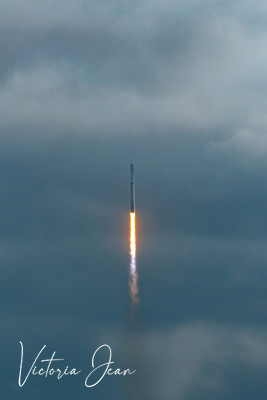
Starlink satellite group 6-33 launched by SpaceX for its 90th mission of 2023 in the early morning hours, just after 12am on December 7 from Cape Canaveral SLC-40. This was the first clear sky I've had in a while so I wasn't going to miss it! The view from Lake Santa Fe, with the constellation Orion high above made for a magical night in the crisp cold 40° Florida temps.
Another new location, with a malfunctioning phone compass, left me half guessing the trajectory, but I'm rather happy with the end result. Very happy with how Orion settled nicely into the frame. Also in this image, albiet very faintly to the left of the launch arc is the booster re-entry burn as it returns for landing on the drone ship, JRTI out on the Atlantic ocean.
Mission Details:
Falcon 9 Block 5 Starlink Group 6-33
- Thrust: 7,607 kN
- Stages: 2
- Height: 70 m
- Fairing Height: 13 m
- Booster B1077 Flight #9
- Type: Communications
- Launch Cost: $67,000,000
- Location: SLC 40, Cape Canaveral FL
Click on the photo to see a larger version with the Orion constellation.
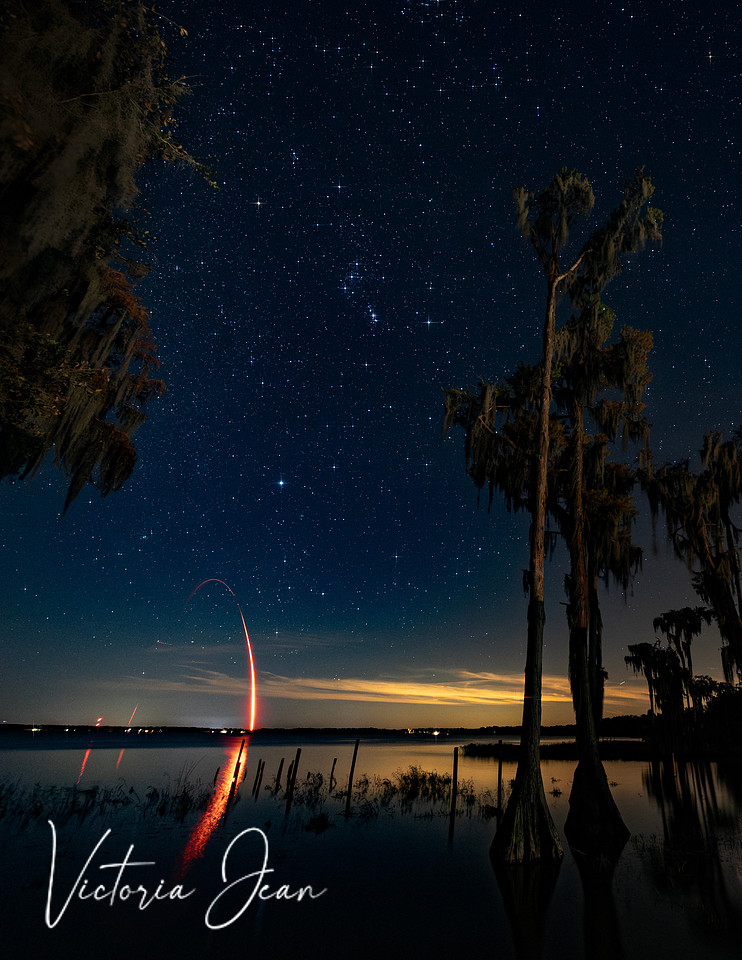 Falcon 9 Starlink 6-33 With Orion Constellation Falcon 9 Starlink 6-33 With Orion Constellation
Irvine Park's Christmas Village 2023 (Chippewa Falls, WI) officially opened Thanksgiving night, but this aerial view was taken the night after. It showcases the lovely twinkling of over 100,000 Christmas lights and over 100 life-size Christmas scenes that replicate the Victorian era and the city's early history. The new Chippewa Area History Center can also be seen in the lower right of the image, a wonderful multi-level museum filled with treasures of the past, bringing to life the rich history of the Chippewa Valley, culminating with a birds-eye view over Irvine Park from the watch tower on the top level.
The Village will be open 5:00-9:30pm daily until Jan 1. It first opened in 1987, providing Christmas joy for families throughout the years.
While this frigid 18° evening didn't have a blanket of snow, we left Wisconsin just in time the following day, being chased out by the wintery white that dumped across much of the midwestern states.
Feel free to leave comments if you feel so inspired!
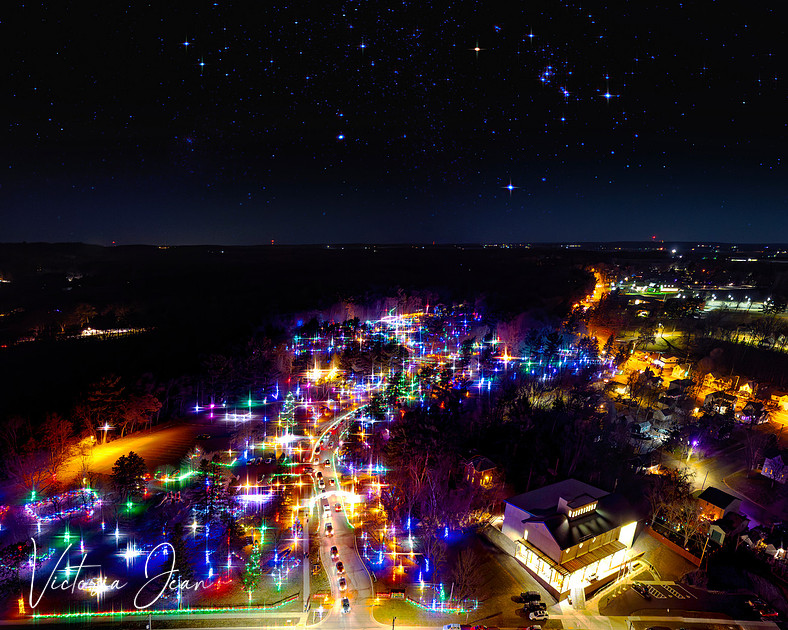 Irvine Park 2023Irvine Park's Christmas Village 2023 Aerial View Irvine Park 2023Irvine Park's Christmas Village 2023 Aerial View
I thought it would be a good idea to visit the boardwalk overlook at Paynes Prairie after dark to shoot star trails in the vast openness of the prairie. Boy was I wrong, for so many reasons. Let me explain why.
First of all, it's not at all as secluded as I had hoped. There were people coming and going along the pier all night. I had both cameras with remote triggers all set up and tried waiting out a few couples, only to be greeted by yet another group of people bouncing down the pier boards. Impossible circumstances for the long exposures I needed. I finally gave up and moved the set-up off the pier out to the banks of the wetlands.
However, that was not without risk, you see, this is a preserve, in Florida... filled with gators! There were so many in the water, I could hear them growling. I swept my flashlight across the water and was shocked to see 20-30 pairs of red glowing eyes staring back at me! I giggled with glee, because that is a photography bucket list item of mine, to get imagery of the dark swamps filled with these prehistoric creatures in the dark with their red eyes glowing, but that is for later.
I was also shocked to learn it was not as dark as I expected for a preserve, but that makes sense when to the North is the city of Gainesville, the source of the light pollution. I knew I could work with that though, getting most of it out of the images in post production. But I forgot about the airport. So. Many. Planes. If you know what it takes to shoot star trails, you know it takes literally hundreds of images to make a single trail image. I cringed at the thought of editing out all those planes from hundreds of images, but I continued on.
After a few hours of shooting, I had enough photos to put together for the final image you see below, shot with two separate cameras over the course of a couple hours. Not exactly what I had in mind, but it is the best with what I had to work with. Oh, and so I don't let you down, I'm throwing in a few photos of the glowing eyes...
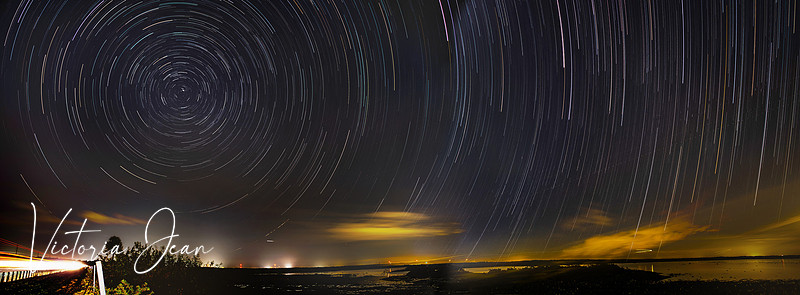 Star Trails Over Gainesville, FLStar trails spin over Gainesville, Florida with the wetlands of Paynes Prairie in the foreground. Star Trails Over Gainesville, FLStar trails spin over Gainesville, Florida with the wetlands of Paynes Prairie in the foreground.
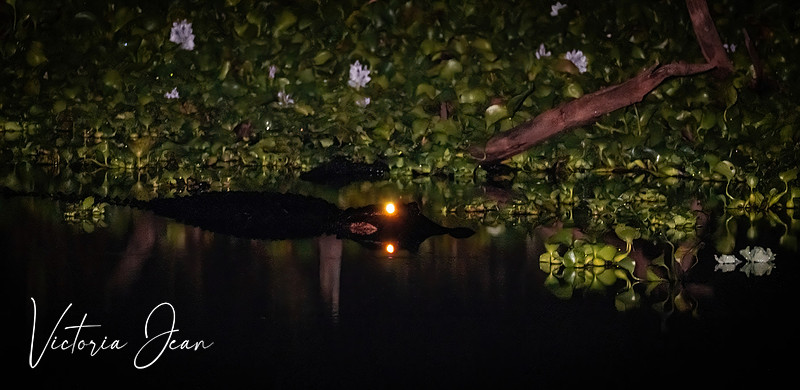 Gainesville Gator Gainesville Gator
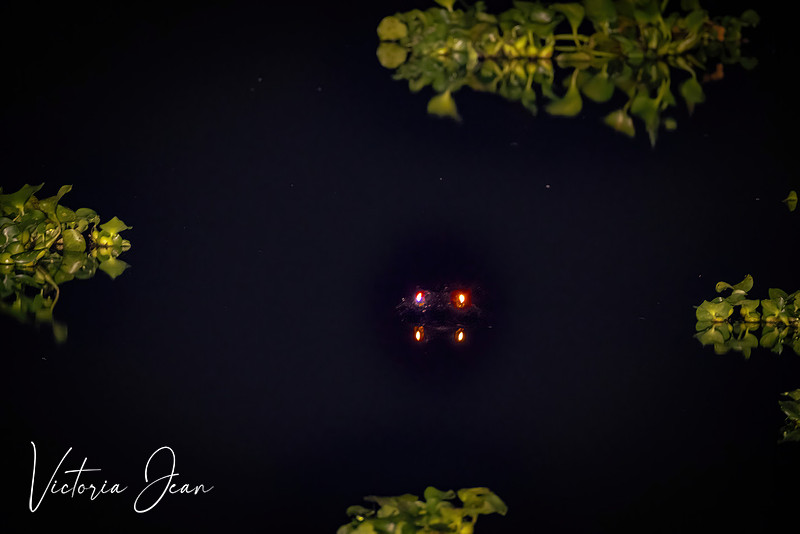 Gainesville Gator Gainesville Gator
So, we got to see the Space Station, now let's watch them send supplies to the Space Station! The last resupply mission is launched from the Space Coast for the year. What a spectacular show with the clear skies overhead.
The 29th Commercial resupply services mission to tie International Space Station operated by SpaceX is viewed from Lake Santa Fe, Florida as it flies in a Northern trajectory from launch complex 39A at Kennedy Space Center during the Thursday, November 9 launch. Also visible in this photo is the booster return to landing zone 1.
Take note of the burn-back maneuver at the end of the arc, where after stage separation, the booster begins its return to the launch site, a magical sight to behold! This is the second flight of booster B1081.
The Cargo Dragon 2 delivers supplies and payloads like science and research experiments to the ISS. This is the second flight of C211.
Mission Details
Falcon 9 Block 5 Dragon CRS SpX-29
Price: $52 Million
Thrust: 7,607 kN
Stages: 2
Height: 70 m
Fairing Height: 13 m
Booster: B1081 Flight #2
Type: Resupply
Location: SLC 39A, KSC FL
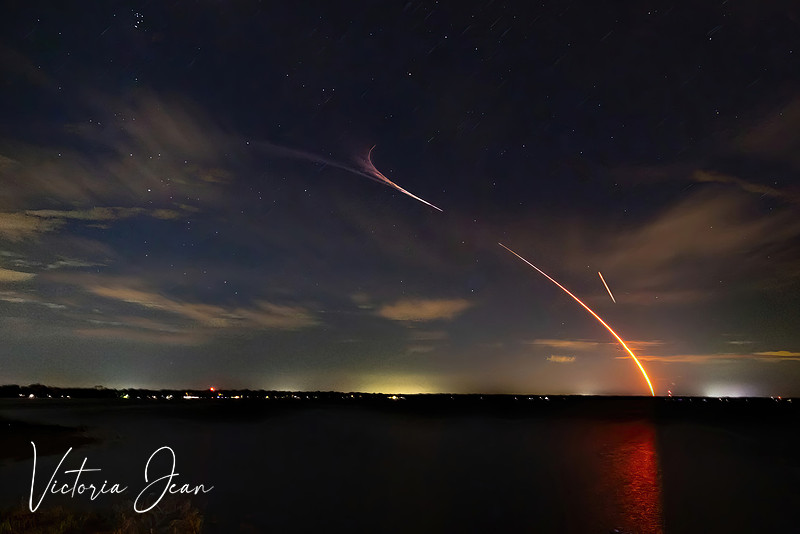 ISS Resupply Mission Falcon 9 Dragon CRS-2 SPX-29The 29th Commercial resupply services mission to tie International Space Station operated by SpaceX is viewed from Lake Santa Fe, Florida as it flies in a Northern trajectory from launch complex 39A at Kennedy Space Center during the Thursday, November 9 launch. Also visible in this photo is the booster return to landing zone 1.<br/> Take note of the burn-back maneuver at the end of the arc, where after stage separation, the booster begins its return to the launch site, a magical sight to behold! This is the second flight of booster B1081.<br/> The Cargo Dragon 2 delivers supplies and payloads like science and research experiments to the ISS. This is the second flight of C211.<br/> <u><strong>Mission Details:</strong></u><br/> Falcon 9 Block 5 Dragon CRS SpX-29 <ul> <li>Price: $52 million</li> <li>Thrust: 7,607 kN</li> <li>Stages: 2</li> <li>Height: 70 m</li> <li>Fairing Height: 13 m</li> <li>Booster B1081 Flight #2</li> <li>Type: Resupply</li> <li>Location: SLC 39A, KSC FL</li> </ul> ISS Resupply Mission Falcon 9 Dragon CRS-2 SPX-29The 29th Commercial resupply services mission to tie International Space Station operated by SpaceX is viewed from Lake Santa Fe, Florida as it flies in a Northern trajectory from launch complex 39A at Kennedy Space Center during the Thursday, November 9 launch. Also visible in this photo is the booster return to landing zone 1.<br/> Take note of the burn-back maneuver at the end of the arc, where after stage separation, the booster begins its return to the launch site, a magical sight to behold! This is the second flight of booster B1081.<br/> The Cargo Dragon 2 delivers supplies and payloads like science and research experiments to the ISS. This is the second flight of C211.<br/> <u><strong>Mission Details:</strong></u><br/> Falcon 9 Block 5 Dragon CRS SpX-29 <ul> <li>Price: $52 million</li> <li>Thrust: 7,607 kN</li> <li>Stages: 2</li> <li>Height: 70 m</li> <li>Fairing Height: 13 m</li> <li>Booster B1081 Flight #2</li> <li>Type: Resupply</li> <li>Location: SLC 39A, KSC FL</li> </ul>
The International Space Station passed over Lake Santa Fe early on the morning of Wednesday, November 8, 2023. A crescent Moon illuminated the early sky with a bright planet Venus hanging underneath. It became visible in our area approximately at 5:41 am located 29° above NW direction (approx 321 ° ) and proceeded very quickly overhead, decending in a SE direction (approx 134 ° ). The duration of visibility was nearly five minutes, at a brightness of -4 (Keep in mind, the more negative the number of magnitude, the brighter of visibility; a full moon has a magnitide of -13 for comparison.)
In the past, I've shared a few fun apps to track the ISS before, but I'll share them again in case you didn't see them. What makes this fun is some of these apps allow you to listen to the live feed and conversations between the astronauts on the Space Station and Ground Control, or view what their onboard cameras see when looking down toward Earth and screenshot images as they pass over your favorite areas! You can also track other satellites like the Hubble and Starlink trains.
Find some apps here:
https://james.darpinian.com/satellites/?special=starlink&fbclid=IwAR2pXCIbILo_xGYjJLKBc-9nMqkpo9PwRj7p4VhubN1PI7GTdGfQEjOSZSo
https://apps.apple.com/us/app/iss-live-now/id1138994692
https://apps.apple.com/us/app/iss-live-now/id1138994692
https://www.issdetector.com/
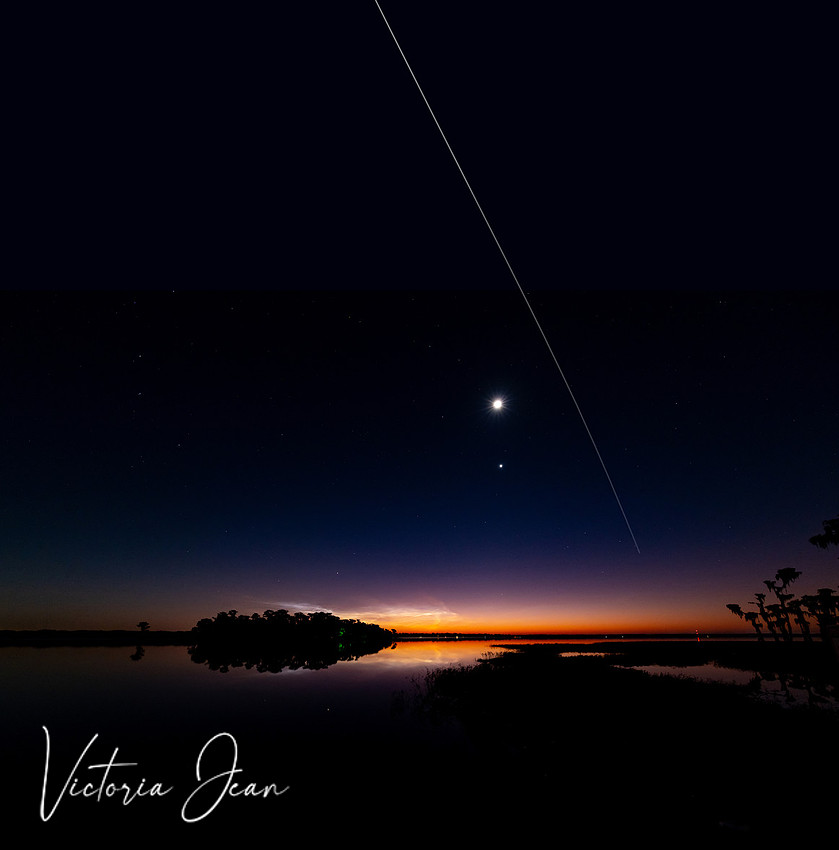 ISS November 8, 2023The International Space Station passed over Lake Santa Fe early on the morning of Wednesday, November 8, 2023. A crescent Moon illuminated the early sky with a bright planet Venus hanging underneath. It became visible in our area approximately at 5:41 am located 29° above NNW direction (approx 321 ° ) and proceeded very quickly overhead, decending in a SE direction (approx 134 ° ). The duration of visibility was nearly five minutes, at a brightness of -4 (Keep in mind, the more negative the number of magnitude, the brighter of visibility; a full moon has a magnitide of -13 for comparison.) ISS November 8, 2023The International Space Station passed over Lake Santa Fe early on the morning of Wednesday, November 8, 2023. A crescent Moon illuminated the early sky with a bright planet Venus hanging underneath. It became visible in our area approximately at 5:41 am located 29° above NNW direction (approx 321 ° ) and proceeded very quickly overhead, decending in a SE direction (approx 134 ° ). The duration of visibility was nearly five minutes, at a brightness of -4 (Keep in mind, the more negative the number of magnitude, the brighter of visibility; a full moon has a magnitide of -13 for comparison.)
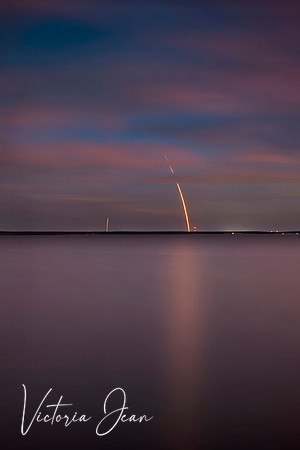
It's another streak. A sunset Starlink launch, this time, a lot more challenging for me because of how quickly the light changes. It is nearly impossible to get test shots for proper exposure (remember, I'm new enough to shooting rocket streaks that I don't have exposures dialed in just yet). Knowing that each test shot takes between 5-7 minutes, a lot can change with regard to light. I also had the challenge of incoming clouds which, while they make a beautiful photo, they also diminish the burning glow of the rocket. Nonetheless, it was still viewable and still lovely from 150 miles north!
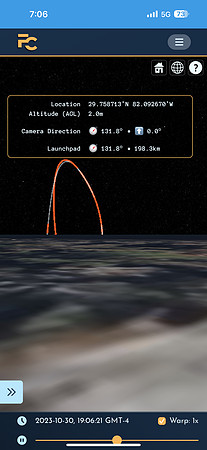
This was a new location as well, so I wasn't confident with the trajectory, but I had a tool for that. The app called FlightClub.io is a powerful toolkit designed just for rocket photography enthusiasts like me. I used its simulator and photography toolkit to show me how the streak would look from where I was standing and to get the exact azimuth reading in degrees so I knew just where to point my camera. You be the judge at how accurate it was. Below is the rendering from the app and my actual photo, which shows both launch from SLC 40 and booster landing.
Mission Details:
Falcon 9 Block 5 Starlink Group 6-25
- Thrust: 7,607 kN
- Stages: 2
- Height: 70 m
- Fairing Height: 13 m
- Booster B1077 Flight #8
- Type: Communications
- Launch Cost: $67,000,000
- Location: SLC 40, Cape Canaveral FL
Click on the photo to see a larger version.
 Falcon 9 Starlink Group 6-25 Falcon 9 Starlink Group 6-25
 FlightClub.io FlightClub.io
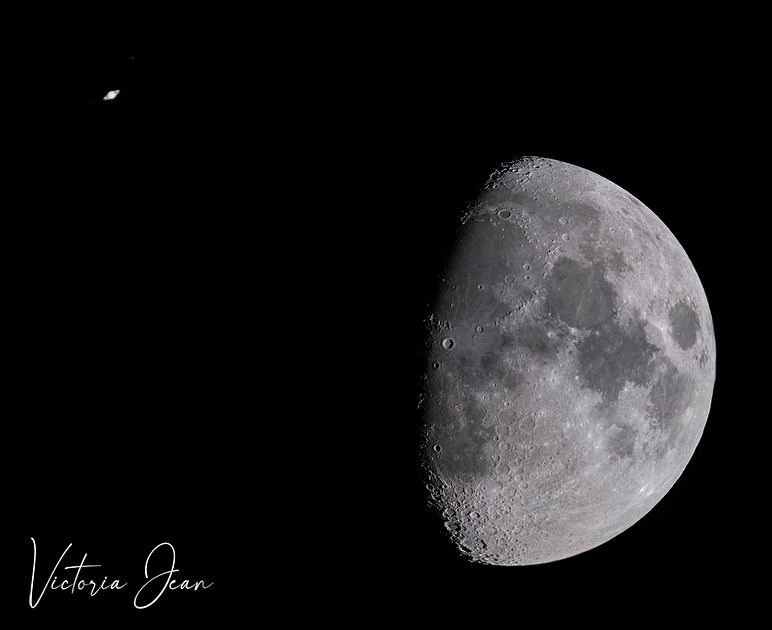
This was officially the second time I was able to see the rings of Saturn... and this time, even some of Saturn's Moons, and it is mindblowing to me. Looking through the end of an 8" telescope, my neighbor was able to give me a vantage point I've never been able to enjoy before. From the rings of Saturn, we turned our gaze to the craters of the Moon, which is equally impressive. I felt as if I could almost see things moving about on the lunar surface.
My astro-friend and neighbor Steve tells me, "Saturn is 30 times larger than our Moon, but since it’s approximately 857 MILLION miles away and the Moon only 240 THOUSAND, it appears 100x smaller. This astrophoto illustrates this principle perfectly!"
During an October 23, 2023 conjunction, the Moon and Saturn were aligned as they rose in the southeastern sky.
This image was created with 6 captures on a Fuji XT-4 fitted to the end of a Meade LX90 8-inch telescope. The planets moved so quickly through the telescopic view, I couldn't believe my eyes!
Those shots were then composited together to make this final image.
 Saturn and MoonDuring an October 23 conjunction, the Moon and Saturn were aligned as they trose in the southeastern sky. Saturn and MoonDuring an October 23 conjunction, the Moon and Saturn were aligned as they trose in the southeastern sky.
This image was created with 6 captures on a Fuji XT-4 fitted to the end of a Meade LX90 8-inch telescope. The planets moved so quickly through the telescopic view, I couldn't believe my eyes!
Those shots were then composited together to make this final image.
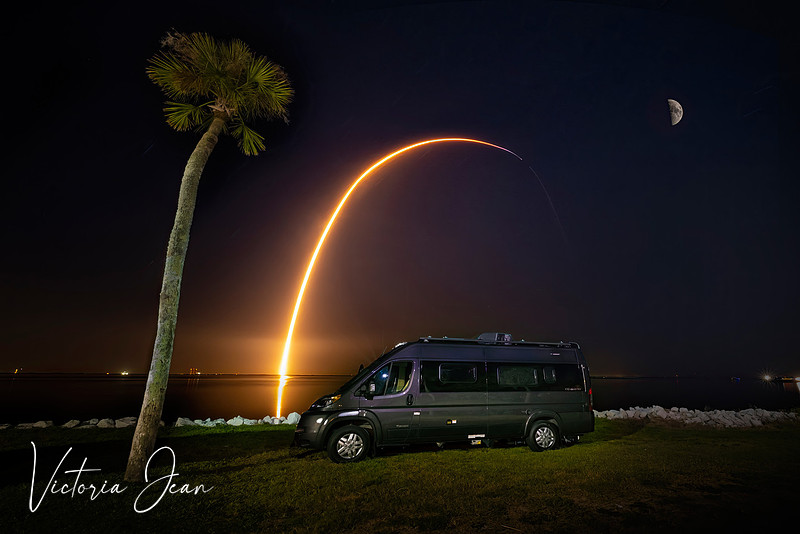
This is Van Life! While waiting in the luxury of a 2023 Winnebago Travato, we enjoyed the recordbreaking 58th mission to launch this year from the Space Coast in Florida! Last year, a total of 57 rockets launched, and after this 58th launch in late October, we know that record will be "blown away" with a few more months left of the year. If that's not good enough, this was also a record-setting heaviest ever payload a Falcon 9 rocket has hoisted into orbit at 40,600 pounds (23 mini Starlink satellites).
What you are looking at is the launch 'streak' from the engine burn of the rocket launch from SpaceX Starlink Satellite Group 6-24 launching from Launch Complex-40 at 10:17 pm on October 21, 2023. It is a long-exposure photo, executed after several weeks of planning for trajectory of the rocket and specific placement of the van to get the arc streak just right as it roars out to orbit over the van in this image. The arc shape is due to the curve of the Earth as the rocket must follow Earth's orbit in order to deploy it's payload into orbit. Once in low earth orbit, a chain of satellites will be deployed to join the vast array of Starlink satellites being deployed by SpaceX for the Starlink system.
The van is a 2023 Winnebago Travato 59K; posh leather interior complete with swivel bucket seats, queen size RV bed (splits into two single beds), kitchen area with sink, stove, microwave and fridge, wet-bath with toilet and shower, and lots of storage. It also has a retractable awning, but we had no need for that on this crisp evening. This classy ride sits on a Ram chassis with a V6 engine. Driving it was a dream! I couldn't even tell I was in an RV. It was quiet and smooth the whole 2.5 hour ride down to Titusville. We averaged 18mpg for gas, which is far better than what our monster Class C used to give us. But, what I was most pleased with was the ease of maneuverabliity on this rig, especially since I had such a specific spot and angle in mind to create this specific shot. I could tell you more about this unit, but honestly, I don't yet know a whole lot about Class B RVs even though I work at (bookkeeping) a dealership, so I'm going to point you to speaking with our competent sales staff if you need more information. Shameless plug for Sunshine State RV here, Florida's #1 Class B dealership.
More about the launch for the space nerds:
Mission Details
- Type: Communications
- Launch Cost: $52,000,000
- Location: LC-40 CCSFS
- Orbit: Low Earth Orbit
The Falcon 9 first stage B1080 landed on ASDS ASOG after its 4th flight.
A Shortfall of Gravitas – ASOG
The fourth ASDS barge, A Shortfall of Gravitas (ASOG) is currently used to recover Falcon 9 and Heavy boosters in the Altantic Ocean.
Autonomous Spaceport Drone Ship – ASDS
 Van Life with Winnebago TravatoThis is Van Life! While waiting in the luxury of a 2023 Winnebago Travato, we enjoyed the recordbreaking 58th mission to launch this year from the Space Coast in Florida! Van Life with Winnebago TravatoThis is Van Life! While waiting in the luxury of a 2023 Winnebago Travato, we enjoyed the recordbreaking 58th mission to launch this year from the Space Coast in Florida!
A good friend always tells me, make lemonade out of lemons. Thats just what I did. After driving a total of 5 hours and waiting 2 hours through delays to attempt to get a streak shot of a night launch in a setting I had envisioned, the launch got scrubbed 20 seconds from launching. Wow was I frustrated. But hey, I do like lemonade!
This is actually a test shot photo that would have had a rocket streak in it, had it launched, but I think it looks pretty smashing just the way it is.
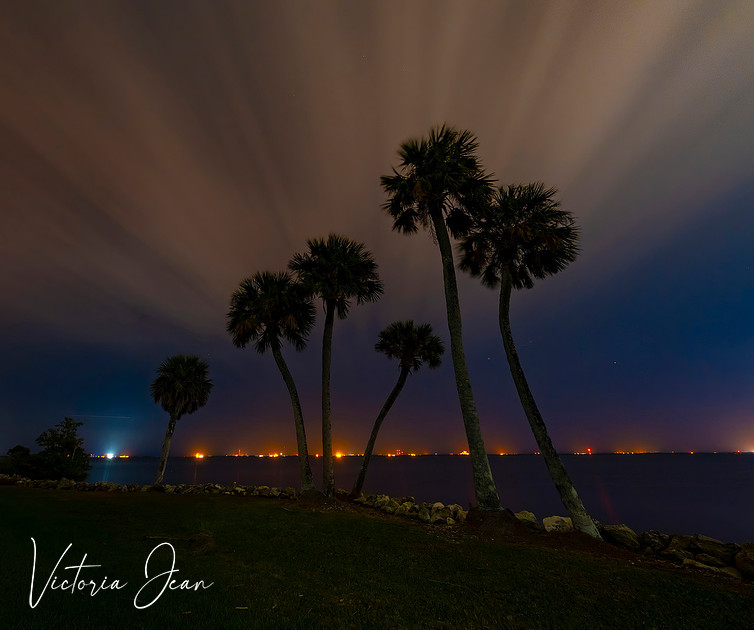 Kennedy Space Center At NightA long exposure of Kennedy Space Center on the horizon at midnight as clouds pass overhead during a scrubbed launch attempt. Kennedy Space Center At NightA long exposure of Kennedy Space Center on the horizon at midnight as clouds pass overhead during a scrubbed launch attempt.
Today, the ISS was the brightest it has been in a while as it streaked across the sky above my front yard in Gainesville. I was tipped off to look up at 6:30 am this morning to track it. I do follow the Starlink Trains by app, but was turned on to a few new and fun apps for following ISS and when to see it at its brightest over my area.
The fun part about tracking the ISS is with these apps, you can also see the video feed and listen to communications! If you care to follow, here are a few fun apps you can use:
Starlink Trains: https://james.darpinian.com/satellites/
ISS: https://www.issdetector.com/
ISS: https://www.isslivenow.com/
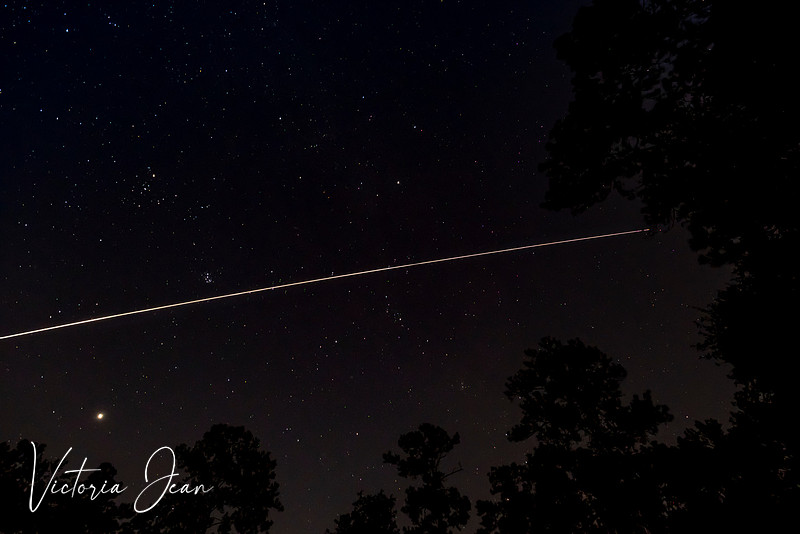 ISS Oct 19International Space Station (ISS) streaks across the early morning sky above the bright planet Jupiter. Clearly seen by the naked eye and lasting only a brief moment. ISS Oct 19International Space Station (ISS) streaks across the early morning sky above the bright planet Jupiter. Clearly seen by the naked eye and lasting only a brief moment.
Viewed from over 150 miles North of Cape Canaveral is the launch and booster return from Falcon 9 Starlink Group 6-23; a batch of 22 satellites for the Starlink mega-constellation - SpaceX's project for space-based internet communication system, successfully launched October 17, 2023 at 8:39 pm EST from launch complex 40 at Cape Canaveral, FL.
Launched on a Falcon 9 two-stage rocket, Block 5 variant (the fifth major interval aimed at improving upon the ability for rapid reusability).
The B1062 core can also be seen in this same photo, landing out on the Atlantic Ocean on ASDS (Autonomous Spaceport Drone Ship) JRTI (named Just Read The Instructions) barge after its 16th flight. It lands here because this was a high-velocity mission, which meant it did not carry enough fuel to return to the launch site landing pad after propelling the spacecraft into orbit.
Mission Details:
- Type: Communications
- Launch Cost: $52,000,000
- Location: SLC 40, Cape Canaveral FL
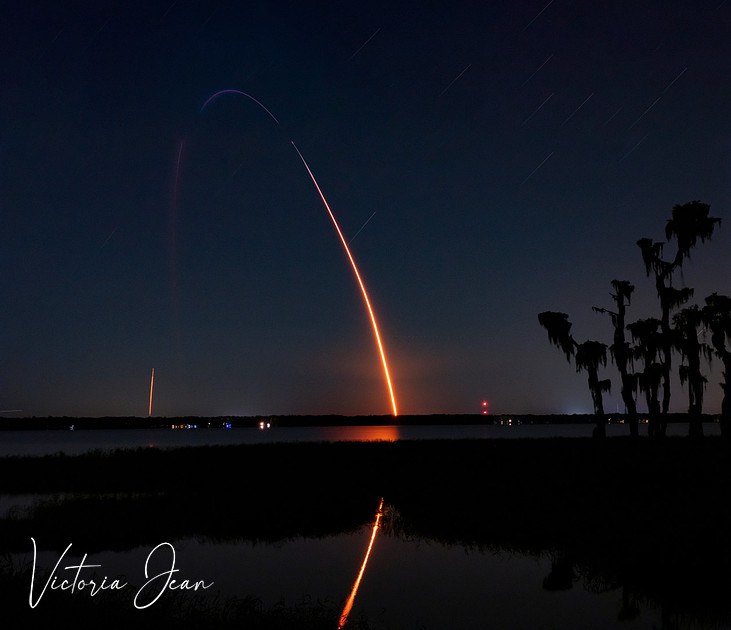 Falcon 9 Starlink Group 6-23Viewed from over 150 miles North of Cape Canaveral is the launch and booster return from Falcon 9 Starlink Group 6-23; a batch of 22 satellites for the Starlink mega-constellation - SpaceX's project for space-based internet communication system, successfully launched October 17, 2023 at 8:39 pm EST from launch complex 40 at Cape Canaveral, FL. Falcon 9 Starlink Group 6-23Viewed from over 150 miles North of Cape Canaveral is the launch and booster return from Falcon 9 Starlink Group 6-23; a batch of 22 satellites for the Starlink mega-constellation - SpaceX's project for space-based internet communication system, successfully launched October 17, 2023 at 8:39 pm EST from launch complex 40 at Cape Canaveral, FL.
Just a brief show of what fall looks like in Florida. We don't really get the delicious autumn tones I'm used to seeing from Northern Wisconsin, but we do get color. In an eruption of golden glowing yellow, fields of swamp sunflowers burst in bloom this time of year to signal the arrival of fall. These guys can reach up to 10 feet tall! Some merely sprinkle the ditches while others take over swamps and fields. The blankets of blooms are an important nectar source for pollinators, then after the blooms have long gone, the seeds stand as a food source throughout the winter for visiting birds and other wildlife.
 Fall in Florida Swamp DaisiesFall in Florida is like no other. The swamp sunflowers are in full bloom during the humid hot days, but wait a day and you will be blessed with a crisp refreshing cold front. Fall in Florida Swamp DaisiesFall in Florida is like no other. The swamp sunflowers are in full bloom during the humid hot days, but wait a day and you will be blessed with a crisp refreshing cold front.
I had a lot going on this weekend. I had tickets to photograph the historic Psyche Mission launch from KSC from a special viewing point I didn't want to miss, but it was facing weather delays. I also wanted to make sure to be ready to photograph the entire solar eclipse, start to finish on Saturday. If the launch got delayed to Saturday, I was going to have a mess on my hands. But alas, it all worked out. Even the cloudy skies parted for brief periods during the eclipse, long enough for me to capture some good shots of each phase.
This was the first actual eclipse I witnessed with my own eyes. It was amazing.
This is a compilation of the three hours I stood out in the Florida sun with a good friend of mine while we viewed the eclipse. I shot over 600 images in my excitement. I was at least prepared enough to have the proper solar filter on the end of my 600mm (approx 900mm on my crop sensor Fuji camera) and eclipse glasses so that we could properly enjoy the event.
Had I been even more prepared, I might have planned to be in the path of totality so that I could photograph the "ring of fire" that the annular solar eclipse produces. Sadly, I may not have that chance for many many years now. Next years will only pass over land at the farthest point of South America. The next to pass over this continent will be in 2039.
You see, the word "annular" does not mean every year in this instance, it means "ring shaped". That meaning comes from the ring of light the moon allows to pass through when it is in totality. An annular solar eclipse happens when the Moon passes between the Sun and Earth, but when it is at or near its farthest point from Earth. Because the Moon is farther away from Earth, it appears smaller than the Sun and does not completely cover the Sun. As a result, the Moon appears as a dark disk on top of a larger, bright disk, creating what looks like a ring around the Moon.
To learn when and where the next annular eclipse will be, click THIS LINK
Here are the images I created from the 2023 annular solar eclipse as viewed from North-central Florida, Santa Fe Lake area.
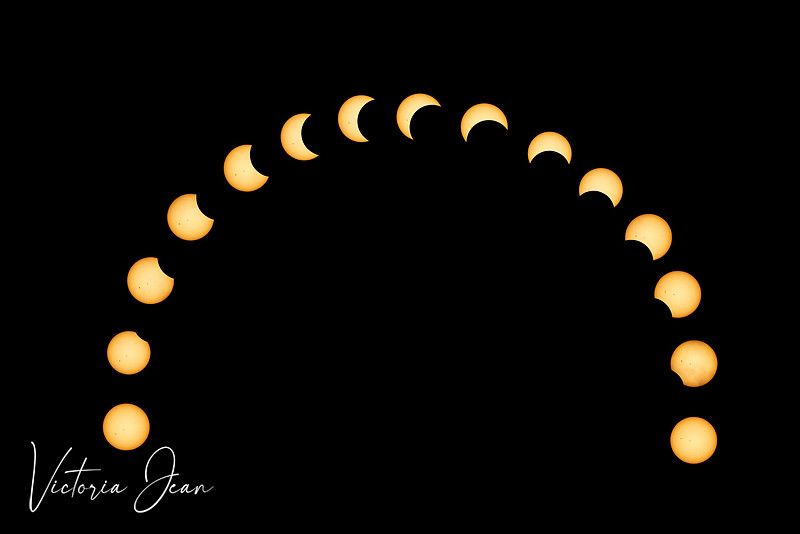 2023 Annular Solar Eclipse, FLAs seen from Lake Santa Fe, Florida, the Annular Solar Eclipse had around 55% coverage. Not a bad view between all the clouds. 2023 Annular Solar Eclipse, FLAs seen from Lake Santa Fe, Florida, the Annular Solar Eclipse had around 55% coverage. Not a bad view between all the clouds.
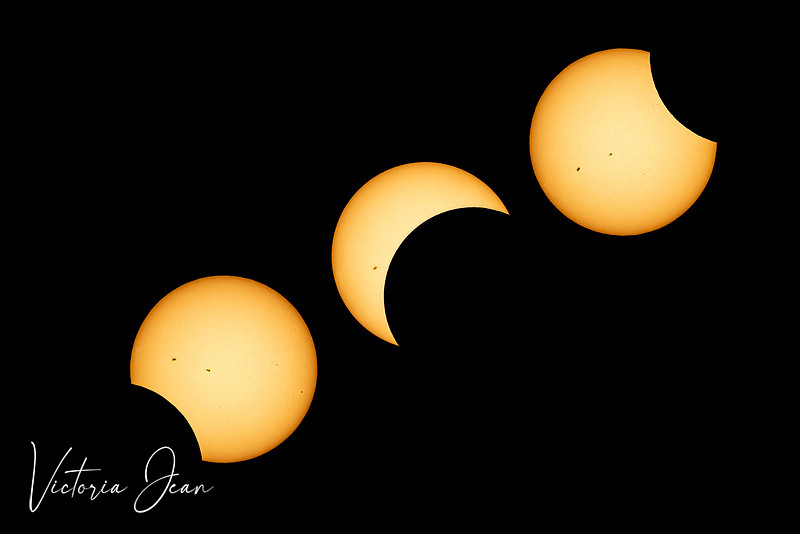 Eclipse Trio, FLAs seen from Lake Santa Fe, Florida, the Annular Solar Eclipse had around 55% coverage. Not a bad view between all the clouds. Eclipse Trio, FLAs seen from Lake Santa Fe, Florida, the Annular Solar Eclipse had around 55% coverage. Not a bad view between all the clouds.
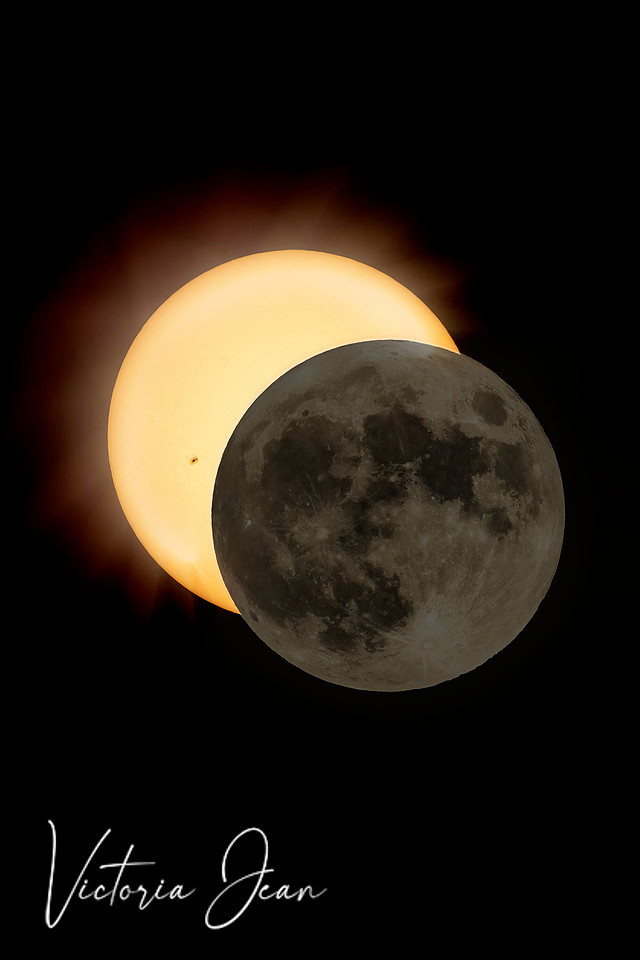 Annular EclipseAs seen from Lake Santa Fe, Florida, the artist rendition of the Annular Solar Eclipse had around 55% coverage. Not a bad view between all the clouds. Annular EclipseAs seen from Lake Santa Fe, Florida, the artist rendition of the Annular Solar Eclipse had around 55% coverage. Not a bad view between all the clouds.

This was a highly anticipated launch! The mission has been in the works for 12 years! And after missing a launch window last year, the team had to wait a full year before another window would open. Then again, more delays pushed two more launch dates to finally a successful launch on Friday, October 13, 2023. I would say this was one of the luckiest Friday the 13th I've experienced. People from all over gathered to take a chance on the weather, hoping for the best, and the sky would clear just enough. As the countdown began, we all held our breath... then the sky began its soft red glow in the distance and the crowd erupted in excitement. Not to be outdone by the crowd, the slow rumble to roar of the rocket rolled across the water and overcame us as the glow grew to an eruption of fire and smoke and the Falcon Heavy took flight!
Psyche Launch VideoA video from my cell phone of the launch.
At launch, Psyche had a mass of approximately 2.6 tonnes. The Falcon Heavy's side boosters returned to landing zones 1 and 2 successfully with the sweet sound of double sonic booms which brought another round of cheers and applause from the crowds that gathered to observe the launch.
The Psyche Asteroid Mission, one like no other, taking human exploration to new boundaries, to a world made of metal - not the rock and ice of the terrestrial scapes we have come to know. Arizona State University leads this mission, partnered with NASA's Jet Propulsion Laboratory sent the payload of the Psyche Spacecraft and its research equipment that includes an imager, magnetometer, and a gamma-ray spectrometer propelling into space toward their target of the Psyche asteroid. The Psyche Spacecraft is scheduled to begin its scientific operations in 2029, where it will orbit the asteroid for approximately 26 months while conducting various experiments.
This Psyche asteroid itself is located between Mars and Jupiter, and scientists believe it to be the core remnants of an early planet that is made up primarily of nickel-iron material. For the first time ever, humankind will be able to test and study planet core material if their suspicions prove correct. This information could provide us with the building blocks of early planets and give a glimpse into a whole new kind of world. As it is not possible to penetrate the depths of our own planet to the core nor have we been provided with such an opportunity in the past, this will indeed be an unprecedented event where countless members of the scientific community will be impatiently awaiting any feedback from the success of this mission.
What a fun launch this was to witness. Wishing the best of success to this mission, to Psyche's 2.2 billion mile journey and hoping for fruitful and exciting discoveries for our scientific community that will foster continued growth in understanding our universe.
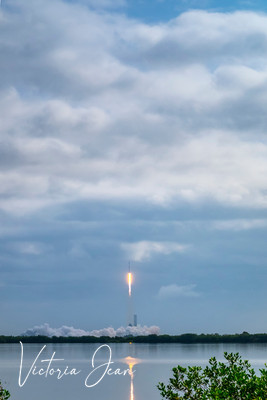 LiftoffFalcon Heavy liftoff with Psyche Spacecraft on the Psyche Mission LiftoffFalcon Heavy liftoff with Psyche Spacecraft on the Psyche Mission
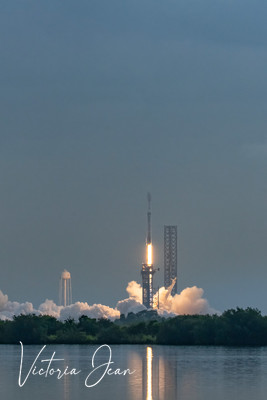 LiftoffFalcon Heavy liftoff with Psyche Spacecraft on the Psyche Mission LiftoffFalcon Heavy liftoff with Psyche Spacecraft on the Psyche Mission
 Psyche MissionFalcon Heavy rocket headed toward space with Psyche Spacecraft aboard on the Psyche Mission Psyche MissionFalcon Heavy rocket headed toward space with Psyche Spacecraft aboard on the Psyche Mission
These are the Mission Details, straight from NASA:
- LAUNCH PROVIDER: SpaceX
- ROCKET TYPE: Falcon Heavy
- LAUNCH PAD: Launch Complex 39A
- BOOSTER(S): Re-usable, Landing Zones 1 & 2 • Cape Canaveral Space Force Station
Science Goals
- Understand a previously unexplored building block of planet formation: iron cores.
- Look inside terrestrial planets, including Earth, by directly examining the interior of a differentiated body, which otherwise could not be seen.
- Explore a new type of world. For the first time, examine a world made not of rock and ice, but metal.
Science Objectives
- Determine whether Psyche is a core, or if it is unmelted material.
- Determine the relative ages of regions of Psyche's surface.
- Determine whether small metal bodies incorporate the same light elements as are expected in the Earth's high-pressure core.
- Determine whether Psyche was formed under conditions more oxidizing or more reducing than Earth's core.
- Characterize Psyche's topography.
Mission Timeline
- Launch: October 13, 2023
- Solar electric cruise: About 6 years
- Arrival at (16) Psyche: 2029
- Observation Period: 26 months in orbit, mapping and studying Psyche’s properties
Mission Events
- 2023 – Launch of Psyche spacecraft from Kennedy Space Center, Florida
- 2026 – Mars Flyby of Psyche spacecraft
- 2029 – Psyche spacecraft arrives in asteroid’s orbit
- 2029-2031 – Psyche spacecraft orbits the Psyche asteroid
Scientific instruments and Investigations
- Multispectral Imager
- Gamma Ray and Neutron Spectrometer
- Magnetometer
- X-band Gravity Science Investigation
Deep Space Optical Communication (DSOC)
The Psyche spacecraft will carry an experiment that will demonstrate NASA’s farthest-ever test of high-bandwidth optical communications. DSOC will send and receive test data using an invisible near-infrared laser, which can transmit data at 10 to 100 times the bandwidth of conventional radio wave systems used on spacecraft today. As the first demonstration of deep space laser communications, DSOC could pave the way for broadband communications that will help support humanity’s next great leap: When NASA sends astronauts to Mars. The DSOC team is based at the Jet Propulsion Laboratory.
|